

 01
Concentrate essentials
Get to know cannabis concentrates
Start with the format. Learn how resin, rosin, and other concentrates differ, and where concentrates fit into infused pre-rolls.
- Format
- Cannabis compounds separated from plant material
- Process
- Resin and rosin are not interchangeable terms
- Experience
- Texture and color do not predict effects
Understanding concentrate types and textures
Cannabis concentrates contain cannabinoids and other compounds separated from cannabis plant material. Many have a higher cannabinoid concentration than flower, although composition varies by product. A small container does not mean a mild product or a single serving.
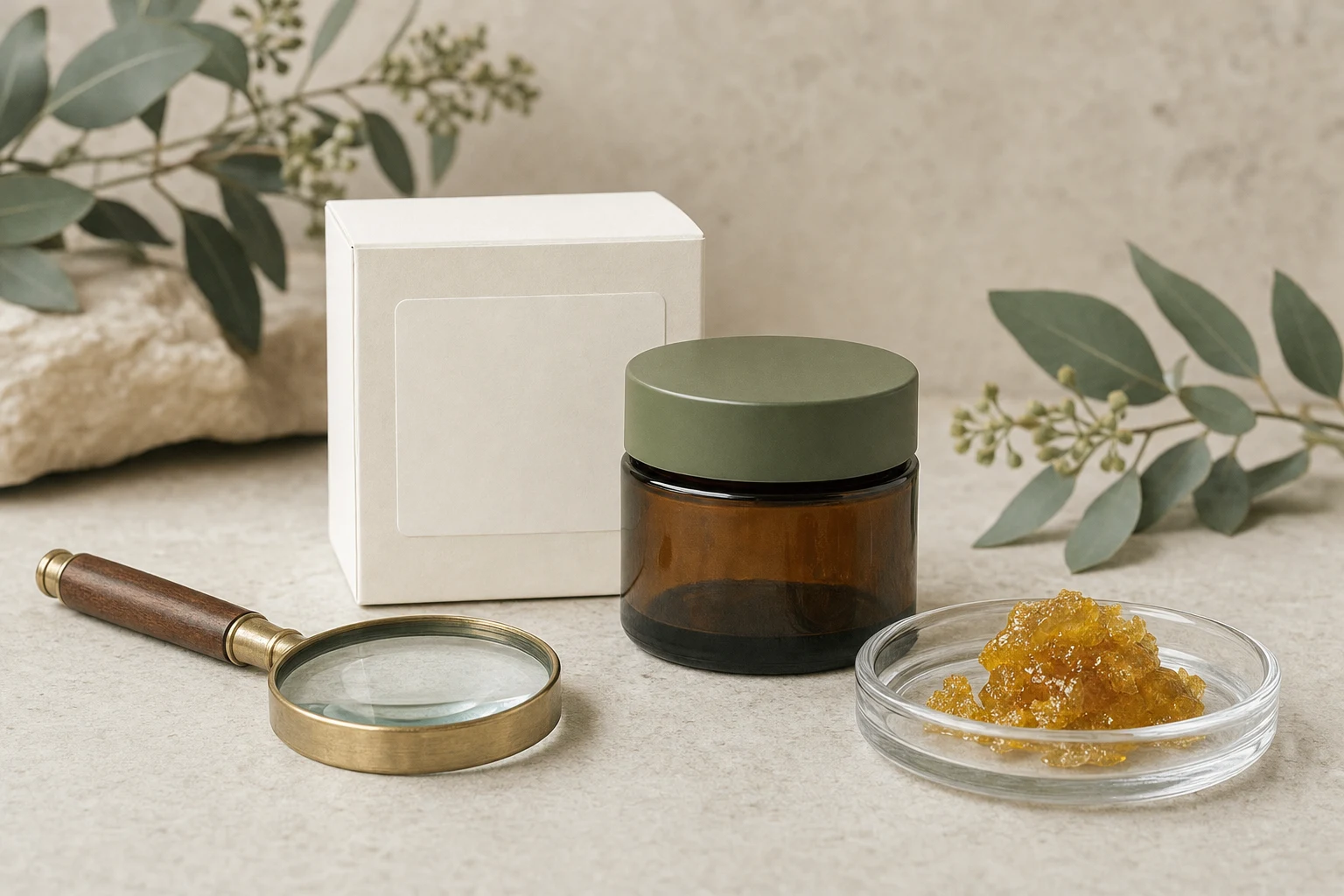
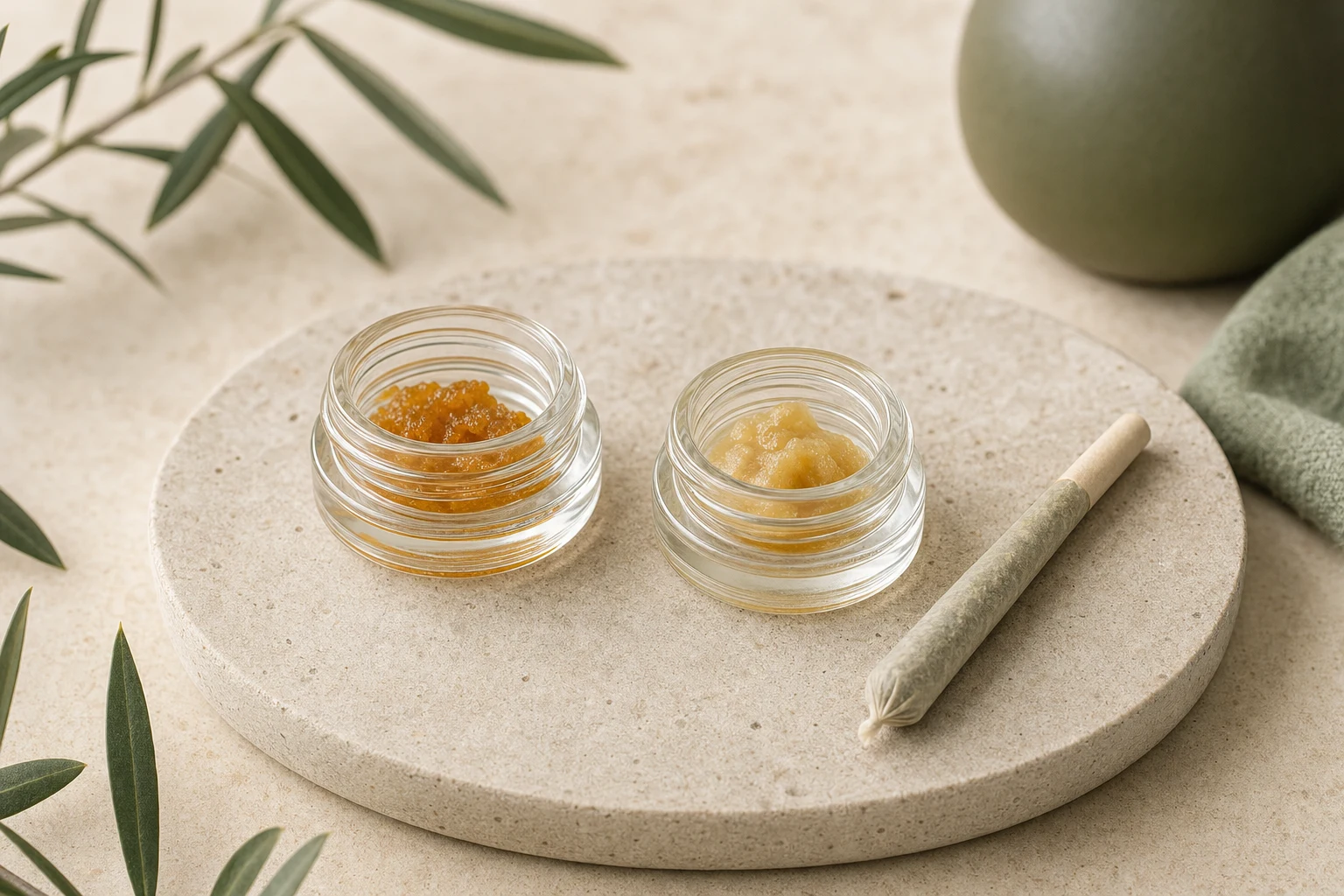
Wax, budder, badder, crumble, shatter, and sauce often describe a concentrate's texture or consistency. These names do not guarantee a particular extraction method, cannabinoid level, or experience. Read the product description rather than judging the contents by appearance alone.
Resin and rosin describe different product families. Live resin is generally made using solvents and fresh-frozen cannabis. Rosin is made using heat and pressure, often from flower or hash, without extraction solvents. Live rosin typically begins with hash made from fresh-frozen cannabis. The word live refers to the starting material, not a safety or quality guarantee.
Hash and kief concentrate resin glands through separation methods rather than solvent extraction. Distillate is a refined extract that concentrates selected cannabinoids; terpenes may be added afterward. Neither solventless nor highly refined means risk-free, so ingredients and batch testing still matter.
Concentrates also appear in infused pre-rolls, where oil, hash, rosin, or other cannabis ingredients may be added to flower. An infused pre-roll is a finished product, not the same format as a jar of concentrate. Check the complete ingredient list and potency information rather than assuming every infusion is alike.
Cultivar names, terpene descriptions, and indica or sativa classifications cannot reliably predict how a product will feel. Individual sensitivity, product composition, and the amount used all influence the experience. Higher THC, a lighter color, or a particular texture is not automatically a sign of better quality.
Learn the format and process, then check the actual ingredients and batch details.