How do you want to shop?
Blogs
What is THC, and What are the Different Types of THC?

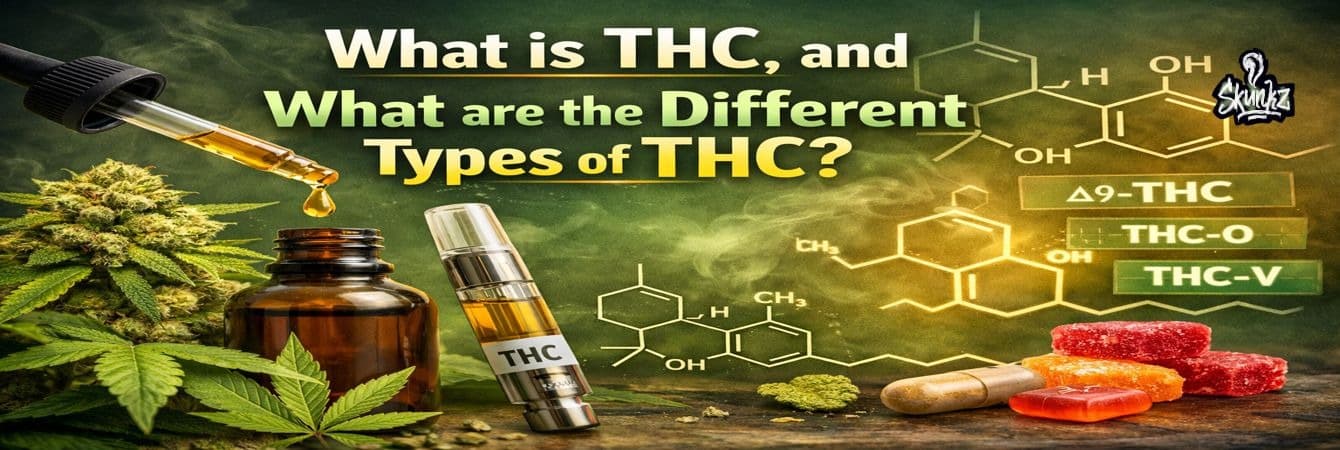
Ever wondered why you get high after smoking a joint, dabbing concentrates, or eating cannabis-infused edibles? It all comes down to THC, the main psychoactive compound in cannabis.
So, what exactly is THC, and how does it work in the body? In this guide, you’ll learn what THC is, how it produces mind-altering effects, and the different types of THC, along with their unique effects.
What is THC and How Does it Work in the Body?
Tetrahydrocannabinol (THC) is the primary psychoactive compound found in cannabis. It is responsible for the high people experience after smoking, vaping, or consuming cannabis products. While cannabis contains several cannabinoids, THC is the main chemical compound that produces mind-altering effects like euphoria, excitement, and even increased appetite.
Where is THC Found in Cannabis?
THC is most concentrated in the flower (buds) of the female cannabis plant. These buds are covered with tiny, crystal-like structures called trichomes, where THC and other cannabinoids are produced and stored.
It’s also found in smaller amounts in the leaves, especially the ones close to the buds. According to the Washington State Liquor and Cannabis Board, during the 1990s, naturally harvested and dried cannabis flowers had a THC level of 5%.
Today, with modern cultivation techniques and selective breeding, THC levels in cannabis flowers commonly range from 10% to 20%, with some cannabis strains reaching 30% to 35% or more.
In addition to cannabis flower, products such as concentrates and infused edibles can contain
significantly higher levels of THC. Cannabis concentrates like kief, wax, oil, and shatter often range from 40% to 99% THC. Edibles and infused products can also contain high THC levels, depending on how they are made.
How Does THC Work in the Body?
THC works by interacting with the body’s endocannabinoid system (ECS), which helps regulate functions like mood, memory, appetite, and pain.
According to the National Library of Medicine, when THC enters the body, it binds mainly to CB1 receptors in the brain and central nervous system. This interaction affects how signals are sent between brain cells, which leads to the mind-altering effects of cannabis.
Common effects of THC include:
- A sense of euphoria or relaxation
- Feelings of joy or excitement
- Heightened sensory perception (colors may appear brighter, and sound and taste may feel more intense)
- Increased appetite
- Increased creativity
The effects can vary depending on how much THC is consumed, the method of use, and individual tolerance. In simple terms, THC mimics natural compounds in your body and alters normal brain activity, which produces the cannabis high.
9 Different Types of THC and Their Effects
There are several types of THC, and each produces different effects. While some are active, others remain inactive until heated, and the way they interact with the body also varies. Here are the 9 different types of THC and their effects.
Delta 9 THC
Generally, THC mainly refers to the Delta-9 THC, as it is the most common, well-known, and naturally occurring form of THC found in cannabis, which is mainly responsible for its psychoactive effects.
It is most abundant in the cannabis flower, particularly in the trichomes, where cannabinoids are produced and stored. When consumed, Delta-9 THC interacts with CB1 receptors in the brain, producing noticeable effects on mood, perception, and behavior.
Delta 8 THC
Delta-8 THC is a naturally occurring cannabinoid found in small amounts in cannabis. It is chemically similar to Delta-9 THC but produces milder psychoactive effects.
It is typically derived from hemp-based CBD through a conversion process, as natural levels in cannabis are very low. Like other forms of THC, Delta-8 interacts with CB1 receptors in the brain, but with less intensity.
Common effects of Delta-8 THC include:
- Mild euphoria
- Relaxation
- Clear-headed high
- Slightly altered perception
Delta-8 THC is generally less potent than Delta-9 THC, making it a more moderate option for recreational use. It is commonly found in hemp products such as edibles, vape cartridges, concentrates, tinctures, oils, and CBD products.
Delta 10 THC
Just like the Delta-8 THC, the Delta-10 THC is also found in trace amounts, which is usually less than 0.1%. As the Delta-10 THC is naturally scarce in the cannabis bud, it is artificially produced in labs by applying heat and chemicals to convert CBD to Delta-10 THC.
Compared to the Delta-9 THC, the Delta-10 THC produces a much lighter high, which is ideal for new users, or people who are looking for a milder and more refreshing recreational high.
THCA
THCA (tetrahydrocannabinolic acid) is the non-psychoactive precursor to THC found in raw and unheated cannabis. It does not produce a high in its natural form.
THCA is most abundant in fresh cannabis flower and is converted into Delta-9 THC when exposed to heat through a process known as decarboxylation, such as smoking, vaping, or cooking. Once heated and converted into THC, it interacts with CB1 receptors in the brain and produces psychoactive effects.
In its original form, THCA does not cause intoxication. However, after heating, it delivers the same effects associated with Delta-9 THC, including:
- Euphoria
- Relaxation
- Altered perception
- Increased appetite
THCA is naturally present in raw cannabis and becomes psychoactive only after heat is applied, making it different from other active forms of THC.
THCP
THCP (tetrahydrocannabiphorol) is a naturally occurring cannabinoid found in very small amounts in cannabis. It is structurally similar to Delta-9 THC but is known to be significantly more potent.
Due to its extremely low natural presence, THCP is typically isolated in small quantities or produced through advanced extraction methods. Like other forms of THC, THCP interacts with CB1 receptors in the brain, but with a stronger binding affinity up to 33 times higher, which can lead to more intense effects.
Common effects of THCP include:
- Strong euphoria
- Deep relaxation
- Intensified sensory perception
- A more long-lasting high
THCP is considered much more potent than Delta-9 THC, making it a powerful option that may produce stronger effects even at lower doses.
THC-O-Acetate
THC-O-Acetate (THC-O) is a semi-synthetic cannabinoid derived from hemp-based THC. It does not occur naturally in cannabis and is created through a chemical process that modifies THC.
As it is chemically altered, THC-O is known for producing stronger and more delayed psychoactive effects compared to Delta-9 THC. The THC-O also interacts with CB1 receptors in the brain, but its effects may take longer to kick in, especially when it's consumed in edible form.
Common effects of THC-O-Acetate include:
- Strong euphoria
- Deep relaxation
- Altered sensory perception
- A delayed but more intense high
THC-O-Acetate is considered more potent than Delta-9 THC, and its delayed onset can make its effects feel stronger over time. It is commonly found in vape products, edibles, and other hemp-derived cannabis products.
THCH
THCH (tetrahydrocannabihexol) is a lesser-known cannabinoid found in very small amounts in cannabis. It is structurally similar to Delta-9 THC but is believed to be more potent.
THCH is typically found in small quantities and produced in larger amounts through specialized extraction methods. THCH binds to CB1 receptors in the brain, which can produce stronger psychoactive effects compared to other types of THC.
Common effects of THCH include:
Strong euphoria
Deep relaxation
Intensified sensory perception
A longer-lasting high
THCB
THCB (tetrahydrocannabutol) is a minor cannabinoid found in trace amounts in cannabis. It is structurally similar to Delta-9 THC but generally produces milder psychoactive effects.
Due to its low natural presence, THCB is typically isolated in small quantities or produced through extraction processes. THCB interacts with CB1 receptors in the brain, but its effects are less intense compared to other THC variants.
Common effects of THCB include:
- Light euphoria Mild relaxation
- Slightly altered perception
- A smoother and more manageable high
Compared to THCH, THCB is noticeably less potent and produces a lighter overall experience. While THCH is associated with stronger and longer-lasting effects, THCB offers a more subtle and controlled high, making it a better option for users who prefer lower-intensity recreational effects.
Comparison of Different Types of THC
To better understand how different types of THC vary, the table below compares their potency, effects, and key characteristics.
Type of THC | Potency | Effects | Source / Formation | Key Characteristic |
Delta-9 THC | High | Strong euphoria, altered perception, relaxation | Naturally abundant in cannabis | Primary psychoactive compound |
Delta-8 THC | Moderate | Mild euphoria, relaxation, clear-headed high | Derived from CBD | Less intense than Delta-9 |
Delta-10 THC | Mild | Light euphoria, uplifting, increased focus | Derived from CBD | More energizing effects |
THCA | None (until heated) | No high unless decarboxylated | Raw cannabis | Converts to Delta-9 THC when heated |
THCP | Very High | Strong euphoria, intense effects, long-lasting high | Naturally occurring (trace amounts) | Much stronger binding to CB1 receptors |
THCV | Low to Moderate | Mild euphoria, alertness, short-lived effects | Naturally occurring | Often produces a more stimulating high |
THC-O-Acetate | Very High | Strong, delayed high, deep relaxation | Semi-synthetic (derived from THC) | Delayed onset of effects |
THCH | High | Strong euphoria, deep relaxation, long-lasting high | Naturally occurring (trace amounts) | More potent than Delta-9 |
THCB | Mild to Moderate | Light euphoria, mild relaxation | Naturally occurring (trace amounts) | Less intense than THCH |
Which Type of THC is Best for Recreational Use?
There is no single best type of THC for recreational use, as it depends on the kind of experience you are looking for. Each type of THC produces different effects, ranging from mild and functional to strong and long-lasting.
For a traditional and well-balanced high, Delta-9 THC is the most common choice. It produces strong psychoactive effects, including euphoria, relaxation, and altered perception, making it the standard option for recreational use.
If you prefer a milder and more controlled experience, Delta-8 THC or THCB may be better options. These forms typically produce lighter effects with less intensity, making them more suitable for beginners or those who want a smoother high.
For a more uplifting and energizing experience, Delta-10 THC or THCV can be preferred. These are often associated with a more active and clear-headed high compared to other types of THC.
On the other hand, if you are looking for a stronger and more intense experience, THCP, THCH, or THC-O-Acetate may produce more powerful and longer-lasting effects, even at lower doses.
Ultimately, the best type of THC depends on your tolerance, preferred intensity, and desired effects. Choosing the right option comes down to understanding how each type works and selecting one that matches your recreational goals.
The Bottom Line: Does the Type of THC Really Matter?
Yes, the type of THC does matter, especially when it comes to the kind of recreational experience you want. While all forms of THC interact with the body in a similar way, their potency, effects, and onset can vary significantly.
Some types, like Delta-9 THC, produce a strong and traditional high, while others, such as Delta-8 or THCB, offer a milder and more controlled experience. On the other hand, compounds like THCP, THCH, and THC-O-Acetate are known for their higher potency and longer-lasting effects.
So, choosing the right type of THC depends on your tolerance, preferred intensity, and how you want to feel. Whether you are looking for a relaxing, uplifting, or more intense high, understanding these differences can help you make a better choice.
Simply put, not all THC is the same, and selecting the right one can significantly impact your overall experience. If you’re unsure, consider visiting a reliable cannabis store and speaking with a budtender to find the option that best suits your recreational needs.
Frequently Asked Questions (FAQs)
What are the two types of THC?
The two most commonly referenced types of THC are Delta-9 THC and Delta-8 THC. Delta-9 THC is the primary psychoactive compound found in cannabis and is responsible for the strong high most people associate with marijuana.
Delta-8 THC is a less potent form of THC that produces milder effects, often resulting in a more controlled and clear-headed experience. While there are several other types of THC, Delta-9 and Delta-8 are the most widely known and commonly used for recreational purposes.
How many different types of THC are there?
There are many different types of THC, with over 113 cannabinoids identified in cannabis, including several THC variants. However, the most commonly discussed types include Delta-9 THC, Delta-8 THC, Delta-10 THC, THCA, THCP, THCV, THC-O-Acetate, THCH, and THCB. Each type has a slightly different chemical structure, which affects its potency, effects, and how it interacts with the body.
What type of THC is the best?
There is no single best type of THC, as it depends on your preferred recreational experience. Different types of THC produce different effects, ranging from mild and functional to strong and long-lasting.
For a traditional and more intense high, Delta-9 THC is the most common choice. For a milder and more controlled experience, Delta-8 THC or THCB may be more suitable. On the other hand, stronger compounds like THCP, THCH, or THC-O-Acetate can produce more powerful and longer-lasting effects. Ultimately, the best type of THC depends on your tolerance, desired intensity, and how you want to feel.
Which is stronger, THCA or THCP?
THCP is significantly stronger than THCA. THCA is non-psychoactive in its raw form and does not produce a high unless it is heated and converted into THC. In contrast, THCP is highly potent and can produce much stronger psychoactive effects even at lower doses.
Which THC is stronger, sativa or indica?
THC strength is not determined by whether a strain is sativa or indica. Both can contain similar levels of THC. The potency depends on the strain’s THC concentration, not its classification.
Will THCA get you stoned?
No, THCA will not get you stoned in its raw form. It only becomes psychoactive when heated and converted into THC, such as through smoking or vaping.